
⚡ Quick Answer
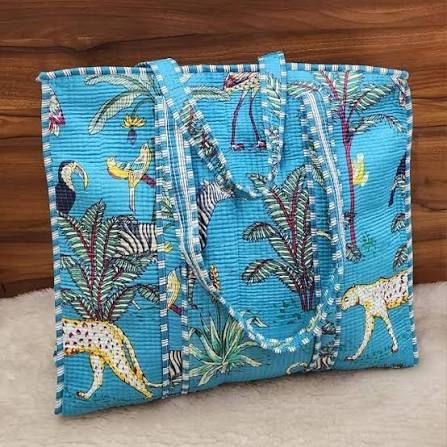
Traditional Indian bags include Kantha bags from West Bengal, Ajrakh bags from Gujarat, Lambani embroidered bags from Karnataka, Shantiniketan leather bags from West Bengal and Phulkari bags from Punjab.
Each region of India produces distinct handcrafted ethnic purses and tote bags rooted in local textile traditions, ranging from vegetable-dyed Kalamkari cotton slings to intricate Sambalpuri Ikat totes and eco-friendly Northeastern bamboo handbags.
What Are Traditional Indian Bags?
If you have ever paired a vibrant ethnic tote with your favourite pastel kurti or styled a rustic embroidered sling with denim, you already know the magic of traditional bags of India. But these gorgeous accessories are far more than just fashion statements. In Indian culture, handcrafted bags—historically called potlis, jholas, or batwas—have functioned for centuries as utilitarian companions, ceremonial gifts, and portable canvases for generational storytelling.
Every single region across our diverse country boasts its own distinct textile lineage, eco-friendly material choice, and surface embellishment style. When you carry genuine regional handmade bags India crafts produce, you aren’t just carrying your keys and wallet; you are carrying pieces of living history woven by skilled artisans. From natural vegetable dyes printed on cotton using hand-carved wooden blocks to intricate silver-mirror embroidery that wards off the evil eye, these traditional Indian handbags embody sustainable fashion at its finest.
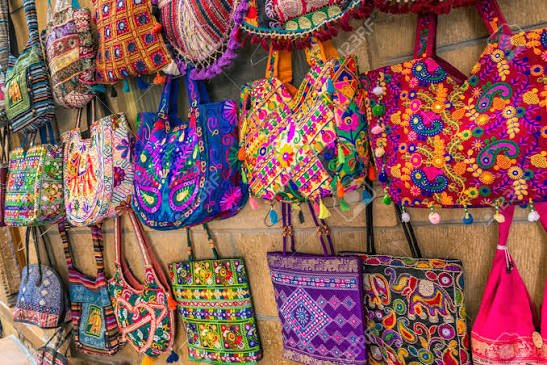
As conscious fashion lovers, understanding these artisanal techniques allows us to make mindful buying choices, support traditional weaving communities, and effortlessly elevate our personal style with authentic ethnic flair. Let’s take an exciting journey across India’s states to explore 15 iconic craft traditions that transform humble fabrics into timeless accessories!
Quick State-Wise Guide: Indian Bag Crafts by State
Before diving into the detailed origin stories of each heritage bag, here is a handy quick-reference comparison table summarizing the top 15 regional crafts, their home states, signature bag styles, and defining visual characteristics:
| State | Craft Name | Common Bag Type | Identifying Feature |
| West Bengal | Kantha Stitch | Tote bags, Slings & Clutches | Running stitch patterns creating textured quilted fabric |
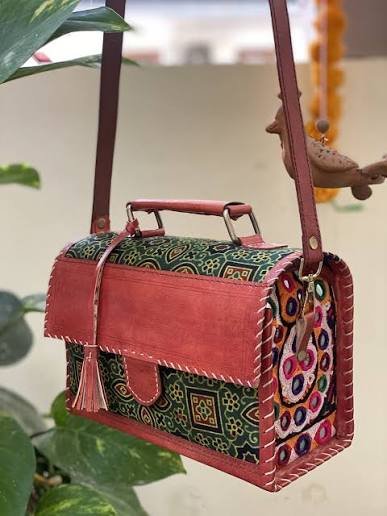
| West Bengal | Shantiniketan Leather | Structured Shoulder Bags & Wallets | Embossed vegetable-tanned leather with batik dye art |
| Gujarat | Ajrakh Block Print | Everyday Jholas & Office Totes | Geometric crimson, indigo & black natural dye prints |
| Gujarat | Kutch Embroidery | Festive Potlis & Envelope Clutches | Dense mirror-work (abhla) with vibrant silk threadwork |
| Rajasthan | Sanganeri & Bagru Print | Boho Sling Bags & Market Totes | Floral motifs on light grounds (Sanganeri) or mud-resist indigo (Bagru) |
| Rajasthan | Shekhawati Patchwork | Large Duffels & Hobo Bags | Upcycled antique sari patches with heavy tassel accents |
| Punjab | Phulkari Needlework | Bridal Potlis & Evening Clutches | Bright geometric flower embroidery using untwisted silk thread |
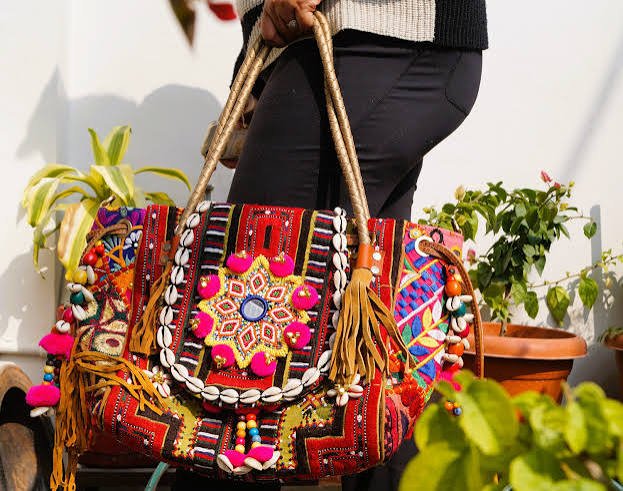
| Karnataka | Lambani Embroidery | Statement Slings & Hobo Bags | Cowrie shells, coins, mirrors & criss-cross stitch patterns |
| Karnataka | Kasuti Embroidery | Elegantly Tailored Shoulder Bags | Intricate geometric temple motifs stitched without knotting |
| Andhra Pradesh | Kalamkari (Srikalahasti) | Artisanal Totes & Crossbody Bags | Freehand pen drawings of mythological motifs in organic dyes |
| Telangana | Pochampally / Gollabama | Handloom Fabric Slings | Inlaid motif weaving or bold geometric warp-and-weft ikat |
| Odisha | Sambalpuri Ikat | Structured Office Totes & Pouches | Blurry-edged tie-dye patterns in high-count cotton/silk |
| Odisha | Pipli Applique Work | Drawstring Jholas & Travel Pouches | Layered fabric cutouts stitched into floral & animal motifs |
| Assam | Cane & Bamboo Weave | Rigid Box Clutches & Basket Totes | Natural bamboo splints woven into sturdy geometric structures |
| Manipur / Nagaland | Kauna Reed & Naga Weave | Beach Totes & Tribal Sling Bags | Soft woven water-reed baskets or bold red-and-black tribal stripes |
West Bengal: Kantha and Shantiniketan Leather
1. Kantha Stitch Bags
Rooted in the rural households of Bengal, Kantha is one of the oldest forms of embroidery in India. Traditionally, village women layered old cotton saris and dhotis, binding them together with simple running stitches to create warm quilts. Today, this master craftsmanship has evolved into lightweight, highly durable fabrics used for modern traditional bags of India.
An authentic Kantha bag features rippled, wavy textures caused by thousands of tiny hand-stitched lines. The motifs depict flora, fauna, village folklore, or geometric abstract shapes. Because artisans often use upcycled vintage silk or cotton sari patches, almost every Kantha tote bag or envelope clutch is an exclusive, one-of-a-kind piece. They are perfect for adding a touch of artistic warmth to casual Indo-western outfits.
2. Shantiniketan Embossed Leather Bags
Pioneered by Nobel laureate Rabindranath Tagore and his institute at Visva-Bharati in Shantiniketan during the early 20th century, Shantiniketan leather craft transformed local leatherwork into fine art. This craft uses vegetable-tanned goat or sheep leather, which is eco-friendly and biodegradable.
Artisans etch intricate paisley, floral, and royal court designs onto the leather using brass blocks and hand tools, followed by meticulous hand-painting with vegetable dyes. Shantiniketan traditional Indian handbags are revered for their structural elegance, rich golden-brown hues, and long-lasting sheen, making them ideal formal office bags and sturdy travel wallets.
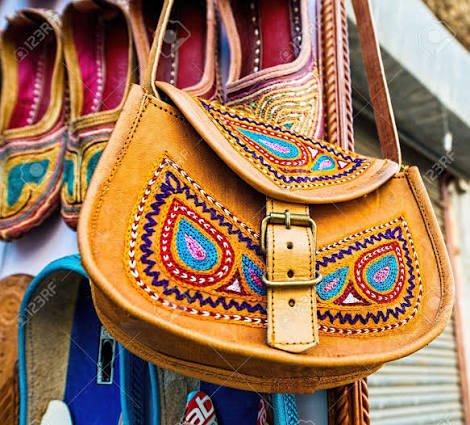
Gujarat: Ajrakh and Kutch Embroidery
3. Ajrakh Block-Printed Bags
Originating from the Khatri community of Kutch, Ajrakh printing is an intensive 16-step hand-block printing technique using natural minerals and plant dyes. The name ‘Ajrakh’ is believed to derive from the Arabic word Azrak (blue) or the Hindi phrase Aaj ke din rakh (keep it for today), reflecting the patience required for its multi-day resist dyeing process.
Ajrakh fabric features complex, mathematically symmetrical geometric star and floral patterns in deep indigo, madder red, black, and white. When crafted into everyday cotton jholas, laptop bags, or crossbody slings, Ajrakh offers an earthy, timeless aesthetic favored by craft enthusiasts across India.
4. Kutch Mirror-Work Bags (Abhla Bharat)
If you love vibrant colors and sparkle, Kutch embroidered bags are bound to captivate you. Practiced by communities like the Ahir, Rabari, and Mutwa across Gujarat’s desert region, this craft utilizes dense silk threadwork interspersed with small glass mirrors (abhla).
The mirrors reflect light and, according to local folklore, ward off negative energy. Kutch embroidered potlis, oversized hobo bags, and evening clutches feature dense chain stitches, buttonhole stitches, and colorful yarn pom-poms or tassels, making them the ultimate statement accessory for Navratri garba nights and festive weddings.
Rajasthan: Block Print and Mirror-Work Bags
5. Sanganeri & Bagru Print Cotton Bags
Rajasthan’s textile capital, Jaipur and its surrounding villages of Sanganer and Bagru, produce some of the most celebrated block-printed cotton fabrics in the world. Sanganeri printing is famous for delicate floral sprigs (buttis) printed on crisp white or pastel backgrounds using woodblocks. In contrast, Bagru printing relies on dark mud-resist dyeing (Dabu) resulting in earthy indigo, terracotta, and black tones.
When searching for lightweight, breathable regional handmade bags India offers for hot summer days, Sanganeri floral totes and Bagru sling bags top the list. They fold easily, wash well, and pair seamlessly with cotton kurtis and summer dresses.
6. Shekhawati Patchwork & Mirror-Work Bags
In the desert districts of Barmer, Jaisalmer, and Shekhawati, artisans practice upcycling in its most magnificent form. Vintage fabric remnants, antique mirror panels, and heavy threadwork are hand-assembled into rich patchwork tapestries.
Bags made from Shekhawati patchwork are rugged, richly detailed, and heavily textured. Accentuated with antique coins, brass beads, and vibrant braided straps, these slouchy hobo bags and travel duffels are favorites among boho-chic travelers and festival-goers.
Punjab: Phulkari Bags
7. Phulkari Threadwork Bags
Literally translating to “flower work”, Phulkari is the heritage embroidery tradition of Punjab. Traditionally gifted during auspicious family occasions, Phulkari is characterized by bright, un-twisted silk threads (pat) stitched onto coarse cotton fabric (khaddar) from the reverse side.
The resulting design presents a glossy, satin-like geometric floral finish on the front. Phulkari traditional Indian handbags, particularly drawstring potlis and boxed clutches, come in vivid hues of sunshine yellow, magenta, emerald green, and crimson. They add a celebratory pop of color to sangeet functions and festive silk saris.
Karnataka: Lambani and Kasuti Bags
8. Lambani (Banjara) Embroidered Bags
Crafted by the nomadic Lambani women of Sandur and northern Karnataka, Lambani embroidery is a vibrant mix of appliqué, patch fabric, diagonal stitch patterns, cowrie shells, metal coins, and tiny mirrors. This craft has rightfully received a Geographical Indication (GI) tag for its cultural uniqueness.
Lambani sling bags and shoulder totes are visually striking. The combination of heavy geometric needlework and rustic cowrie shell borders creates an unmistakable bohemian vibe that transforms even the simplest casual outfit into an artistic statement.
9. Kasuti Hand-Embroidered Bags
Hailing from the Dharwad region of Karnataka, Kasuti is an intricate form of traditional hand embroidery that dates back to the Chalukya period. What makes Kasuti extraordinary is that the embroidery is done by counting threads on canvas or cotton without drawing the design beforehand.
Using four specialized stitches—Gavanti (double running), Murgi (zigzag), Negi (weaving stitch), and Menthi (cross stitch)—artisans create intricate temple gopurams, palanquins, peacocks, and lotus flowers. Kasuti bags are elegant, subtle, and incredibly durable, perfect for lovers of minimalist heritage design.
Andhra Pradesh and Telangana: Kalamkari
10. Kalamkari Painted & Printed Bags
The word Kalamkari combines kalam (pen) and kari (craftsmanship). This ancient South Indian art exists in two main traditions: Srikalahasti (where motifs are drawn entirely freehand using a bamboo pen) and Machilipatnam (which utilizes hand-carved wooden blocks).
Kalamkari traditional bags of India feature captivating depictions of tree of life motifs, peacocks, divine figures, and floral creepers created entirely with natural, organic dyes like madder root, pomegranate rind, and indigo. Kalamkari totes and laptop slings exude intellectual charm and grace, making them immensely popular among college students, educators, and creative professionals.
Odisha: Sambalpuri Ikat and Pipli Applique
11. Sambalpuri Ikat Woven Bags
Odisha’s Sambalpuri Ikat is a masterwork of precision weaving. Known as Bandha, this technique involves resist-dyeing the yarn before it is woven on the loom, so the design emerges gradually as the threads interlock. The hallmark of Ikat is its characteristic soft, slightly blurred edges where the colored yarns meet.
Bags made from high-count Sambalpuri Ikat cotton or silk feature traditional motifs like the shankha (conch), chakra (wheel), and floral vines. A Sambalpuri Ikat shoulder bag or structured laptop tote brings subtle sophistication to professional workwear.
12. Pipli Applique Work Bags
Hailing from the town of Pipli near Puri, this craft originated to create decorative canopies, umbrellas, and banners for the annual Lord Jagannath Rath Yatra. Artisans cut colorful fabric pieces into shapes of birds, animals, flowers, and geometric patterns, stitching them onto a contrasting base canvas with embroidery border accents.
Pipli appliqué drawstring jholas, tote bags, and coin purses are cheery, lightweight, and incredibly durable, carrying a rich legacy of temple town heritage.
Northeast India: Cane, Bamboo, and Reed Bags
13. Assam Cane & Bamboo Handbags
The North-Eastern state of Assam possesses unmatched mastery in bamboo and cane craft. Local weavers split bamboo into thin, uniform strips and weave them into sturdy, eco-friendly structural shapes.
Modern Assamese bamboo handbags feature sleek box clutches, woven picnic totes, and cylindrical shoulder bags lined with soft handloom cotton. Lightweight, completely plastic-free, and beautifully structured, these bags are leading the movement toward sustainable eco-fashion.
14. Manipur Kauna Reed (Water Hyacinth) Bags
In Manipur, artisans turn Kauna (a natural water reed) and water hyacinth stalks into soft, flexible, woven basket bags. Women artisans hand-weave these dried natural fibers into textured lattice patterns that are both lightweight and resilient.
Kauna reed bucket bags and beach totes have gained immense global popularity for their effortless Scandinavian-meets-Indian aesthetic. They are the ideal accessory for weekend brunches and tropical vacations.
15. Nagaland Tribal Woven Sling Bags
Each tribe in Nagaland has its own signature woven textile identity, traditionally created using a backstrap loom. Naga woven bags are easily recognized by their bold black, red, and white geometric stripes, accented with traditional fringe work and bone or bead fittings.
Carrying a Naga woven sling bag is a fantastic way to honor Northeastern tribal textile heritage while enjoying a sturdy, eye-catching crossbody bag built for daily errands.
How to Distinguish Authentic Indian Bag Crafts from Cheap Imitations
With the rise of mass-manufactured fast fashion, market stalls and online sites are flooded with cheap screen-printed or synthetic knockoffs that imitate Indian bag crafts by state. Here is how you can spot authentic handloom products before investing:
- Examine the Reversibility & Thread Flaws: Genuine hand-embroidered bags (like Kantha, Kasuti, or Phulkari) will have slight imperfections, varying stitch lengths, and neat thread knots on the underside. Machine-made embroidery is overly uniform, perfectly symmetrical, and uses synthetic glossy polyester threads.
- Check for Natural Dye Odors and Bleed: Authentic vegetable-dyed fabrics (Ajrakh, Kalamkari, Bagru) have a faint, earthy aroma of fermented iron, indigo, or turmeric. Screen-printed chemical knockoffs smell of plastic or solvents and lack the subtle color variations characteristic of hand blocks.
- Look for Official Craft Certifications: When buying high-value traditional Indian handbags, look for official government certification tags such as the Handloom Mark, Craftmark, or Geographical Indication (GI) Tag labels on the product.
- Analyze the Fabric Texture: Hand-woven fabrics like Sambalpuri Ikat or Naga weaves have a rich, tactile grain with subtle slubs. Synthetic polyester printed imitations feel slick, slippery, and cold to the touch.
Where to Buy Responsibly and Support Indian Artisans
When purchasing regional handmade bags India crafts offer, buying directly from ethically driven channels ensures that your money goes straight into the hands of the artisan communities who spend weeks crafting each piece.
💡 Ethical Shopping Channels:
- State Handicraft Emporiums: Visit state-run government outlets like Central Cottage Industries Emporium, Cauvery (Karnataka), Biswa Bangla (West Bengal), Gurjari (Gujarat), or Rajasthali (Rajasthan).
- Artisan Co-operatives & NGO Brands: Buy from verified non-profit craft organizations such as Fabindia, Craftsvilla, Dastkar exhibitions, Craft Council of India, and Tribal India (TRIFED).
- Direct Artisan Fairs: Attend craft exhibitions like Surajkund Mela, Dilli Haat, or SARAS Mela to purchase directly from national award-winning weavers without middlemen.
Frequently Asked Questions (FAQs)
Q1. Which traditional Indian bag is best suited for everyday office use?
For office and daily work environments, Shantiniketan embossed leather totes and Sambalpuri Ikat structured cotton bags are top choices. They offer sturdy structural support, ample space for laptops and files, and a professional yet culturally rich aesthetic.
Q2. How do I clean and maintain hand-embroidered or block-printed cotton bags?
Always spot-clean hand-embroidered or vegetable-dyed cotton bags with a mild fabric detergent using a damp cloth. Avoid harsh machine washing or soaking, as natural dyes may run initially. For embellished bags with mirrors or shells, store them in a soft cotton dust bag away from direct sunlight and humidity.
Q3. Are eco-friendly Northeastern cane and bamboo bags durable for long-term use?
Yes, absolutely! Assamese bamboo and Manipuri Kauna reed bags are crafted from naturally resilient, sun-dried plant fibers. If kept dry and stored in a well-ventilated area, high-quality bamboo and reed bags can easily last for years without losing structural integrity.
Q4. What is the difference between a Potli bag and a Jhola bag?
A Potli bag is a small, pouch-like handbag closed with a drawstring, usually made from rich fabrics like silk, velvet, or Phulkari embroidery, and carried during festive or bridal occasions. A Jhola bag is a spacious, lightweight shoulder tote usually made of printed cotton (like Ajrakh or Bagru), designed for everyday errands, market runs, or informal outings.
See Also
Traditional Indian Bridal Potli with Gota Patti, Mirror Embroidery, and Jewel Tassels
Best Bags & Traditional Accessories Shopping in India | Hand Bags, Potli Bags, Pouches & Travel Bags
Kalamkari Bags: How to Style India’s Hand-Painted Textile Art as a Modern Accessory
Vocal For Local: 5 Homegrown Indian Bag Brands You Need on Your Radar