
Looking for a handbag that adds a splash of colour to your outfit while celebrating Indian craftsmanship? Phulkari bags for women are worth exploring. With their cheerful embroidery, striking patterns and unmistakable Punjabi character, these bags offer something different from ordinary factory-made accessories.
Whether you’re dressing up for a cousin’s wedding, heading to college, attending a festive gathering or simply stepping out for coffee, a colourful Phulkari handbag can transform even a simple outfit.
But there’s more to these bags than their appearance.
Not every bag advertised as Phulkari is hand-embroidered. Some use traditional needlework, while others feature machine embroidery or printed designs inspired by Phulkari motifs. And depending on the fabric, construction and finishing, two similar-looking bags can differ considerably in price and durability.
So how do you choose the right one?
In this guide, we’ll explore the history of Phulkari embroidery, popular handbag designs, ways to recognise genuine handwork, practical buying tips and simple methods to keep your bag looking beautiful.
What Is a Phulkari Bag?
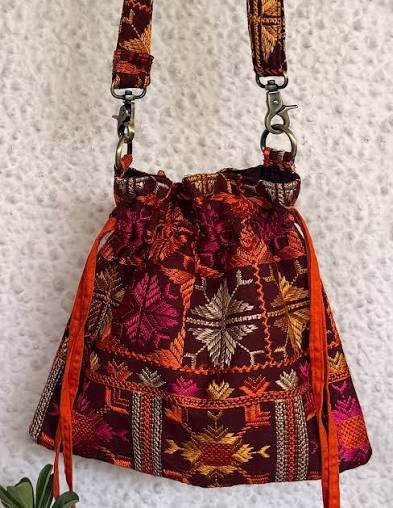
A Phulkari bag is a handbag decorated with embroidery inspired by Punjab’s traditional Phulkari needlework. These bags are available as totes, slings, clutches and potlis, often featuring colourful floral or geometric patterns. Buyers should distinguish traditional hand embroidery from machine-made and printed Phulkari-inspired designs. (Philadelphia Museum of Art — Historical Phulkari textile)
The word Phulkari comes from Punjabi: phul means flower, and kari refers to work or craftsmanship. The embroidery tradition developed across the wider Punjab region, including areas that are now part of India and Pakistan.
Traditionally, Phulkari was embroidered on shawls, wraps and garments. Today, its recognisable designs also appear on handbags, cushion covers, footwear, jackets and other accessories.
What makes these bags special is the combination of expressive colour and textile craftsmanship.
Imagine carrying a cream cotton tote decorated with mustard-yellow, pink and green embroidery. Or pairing a deep maroon Phulkari clutch with a plain black kurta. The embroidery itself becomes the main fashion statement.
For anyone who enjoys accessories with a regional identity, Phulkari bags for women offer a colourful way to incorporate Indian textile traditions into everyday dressing.
The Story Behind Traditional Punjabi Phulkari Embroidery
Before Phulkari became popular in contemporary fashion accessories, it was closely connected to women’s lives in Punjab.
For generations, women embroidered Phulkari textiles for family occasions, celebrations and important life events. Some pieces were prepared for weddings and formed part of a bride’s trousseau. Others were treasured as family textiles and passed down through generations.
The craft was not simply decorative. It reflected skill, patience, relationships and personal expression.
How is traditional Phulkari embroidery made?
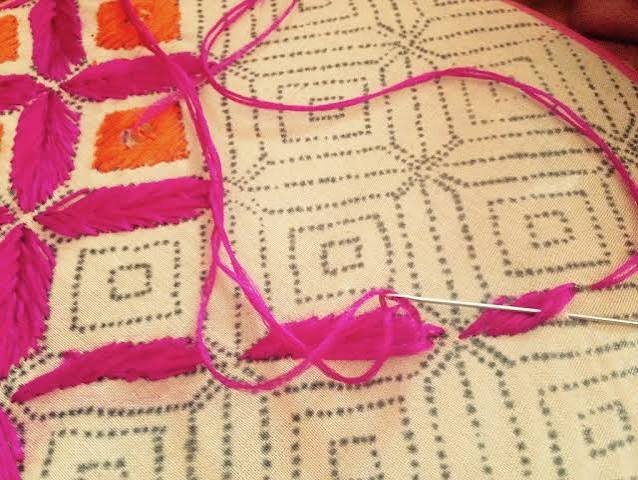
Traditional Phulkari embroidery commonly uses a darning stitch worked from the reverse side of the fabric. The stitches create colourful patterns on the visible surface.
Historically, artisans worked on coarse handspun and handwoven cotton called khaddar, using untwisted silk floss thread known as pat.
The embroidery process can be understood in five steps:
- Preparing the base fabric: Traditionally, khaddar provided a firm surface with visible threads that helped guide the embroidery.
- Planning the design: The embroiderer worked out the placement of geometric, floral or other motifs, often by counting fabric threads.
- Working the stitches: Darning stitches were made from the reverse side, creating longer visible sections of thread on the front.
- Building the pattern: Different stitch directions and colours produced distinctive shapes and shimmering effects.
- Finishing the textile: The embroidered cloth was prepared for its intended use.
Modern Phulkari accessories may use cotton blends, silk blends, synthetic threads and different embroidery methods. Therefore, a contemporary bag need not use every historical material to be Phulkari-inspired.
However, buyers looking for traditional hand craftsmanship should understand these differences.
Phulkari vs Bagh embroidery: What is the difference?
You may come across the term Bagh while shopping for Punjabi embroidered handbags.
Both Phulkari and Bagh belong to closely related embroidery traditions.
In a common historical distinction, Phulkari leaves portions of the base fabric visible, while Bagh uses dense embroidery that covers most or nearly all of the cloth.
The word Bagh means garden, which nicely captures the richly decorated appearance of these textiles.
| Feature | Phulkari | Bagh |
|---|---|---|
| Embroidery coverage | Often leaves fabric visible | Dense, extensive coverage |
| Traditional technique | Darning stitch | Closely related darning stitch |
| Visual appearance | Individual motifs and patterns | Rich, almost continuous embroidery |
| Traditional uses | Shawls and ceremonial textiles | Elaborately embroidered wraps and ceremonial textiles |
Today, manufacturers may use these names more loosely when describing bags. A heavily embroidered handbag is not automatically an authentic traditional Bagh piece.
Types of Phulkari Bags for Women: Tote, Sling, Clutch and Potli
One of the nicest things about contemporary Punjabi Phulkari handbags is their variety.
You don’t have to reserve them for traditional outfits or weddings. Several designs work beautifully with modern, everyday clothing.
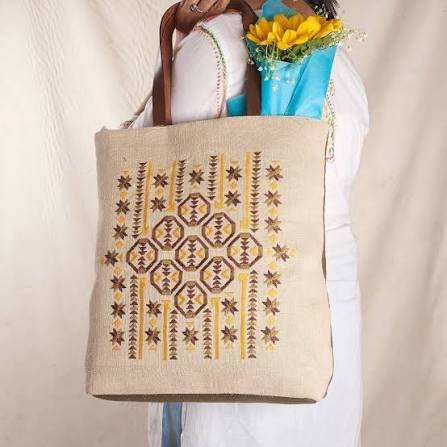
1. Phulkari tote bags for college, office and shopping
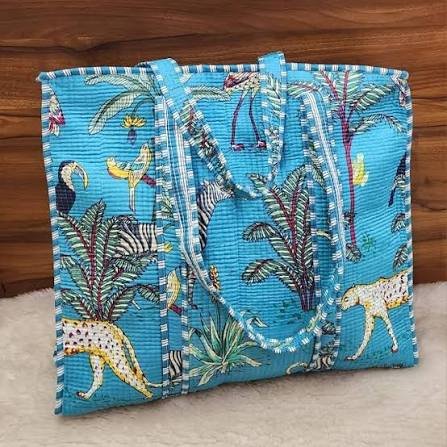
A handmade Phulkari tote bag is a practical choice if you prefer carrying several essentials in one place.
Totes generally have spacious interiors and shoulder handles. Depending on the design, they can accommodate a wallet, phone, notebook, makeup pouch and other daily necessities.
A cotton tote featuring colourful embroidered panels looks lovely with:
- Straight-cut kurtis and cotton trousers
- Jeans and a plain white shirt
- Casual salwar suits
- Simple linen dresses
For everyday use, choose a tote with strong handles, durable stitching, a secure closure and a washable or replaceable lining where possible.
If you carry a laptop, check the actual dimensions and load-bearing construction. Decorative embroidery alone does not make a bag suitable for heavy items.
2. Phulkari sling bags for casual outings
A Phulkari sling bag offers a compact, hands-free alternative to a large handbag.
These bags are ideal for short outings when you only need your phone, wallet, keys and a few essentials.
A crossbody design can be especially convenient when travelling by metro, browsing markets or attending a mela.
Look for an adjustable strap and a secure zip or flap. If the bag has metal hooks, check that they are firmly attached.
Colourful sling bags work particularly well with neutral outfits. Try pairing one with black jeans and a plain kurti for a relaxed Indo-Western look.
3. Phulkari clutches for weddings and festive occasions
Looking for something to accompany your outfit at a mehendi, sangeet or Diwali party?
A Phulkari clutch can be a lovely option.
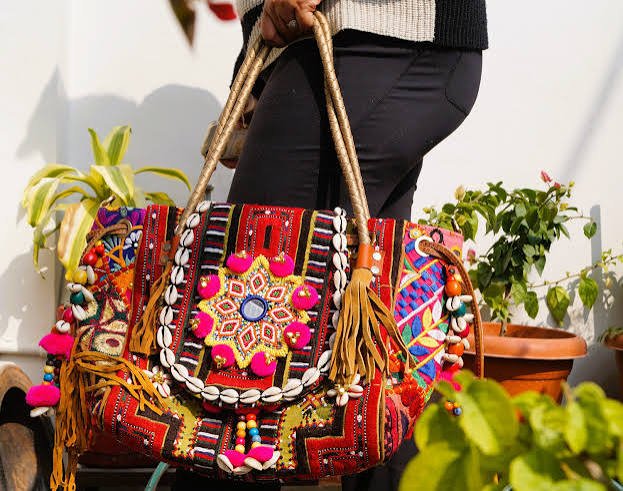
These compact bags often feature bright embroidery, decorative borders, beads or other embellishments.
They look attractive with:
- Silk sarees
- Anarkali suits
- Sharara sets
- Plain festive kurtas
- Contemporary Indo-Western outfits
If your outfit is already heavily embroidered, consider a clutch with fewer colours or a simpler motif. The idea is to complement your clothes, not compete with them.
4. Phulkari potli bags for traditional outfits
Potli bags are popular accessories for Indian weddings and festivals.
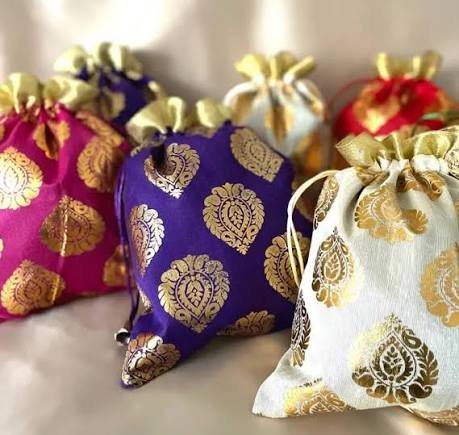
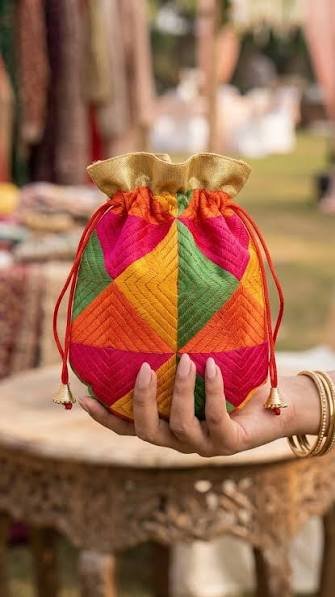
A Phulkari potli typically features an embroidered fabric body and a drawstring closure, sometimes with tassels or decorative trims.
The round or gathered silhouette gives it a festive appearance.
A colourful potli can make a charming accessory for a Punjabi suit, lehenga or simple saree.
Before buying, check whether the drawstring opens smoothly and whether the lining can protect your jewellery, phone and other belongings.
Which Phulkari bag style should you choose?
| Bag type | Best suited for | What to check |
|---|---|---|
| Tote bag | College, shopping, casual office use | Capacity, handles, lining |
| Sling bag | Travel, errands, casual outings | Strap, zip, weight |
| Clutch | Weddings, parties, evening events | Closure, embroidery, interior |
| Potli bag | Festivals, weddings, traditional wear | Drawstring, lining, size |
For most everyday situations, a lined tote or sling will be more versatile than a heavily embellished clutch or potli.
How to Identify Authentic Hand-Embroidered Phulkari Bags
This is one of the most important things to understand before buying Phulkari bags for women.
A beautiful embroidered handbag is not necessarily hand-embroidered.
Machine embroidery and printed Phulkari-inspired patterns can look attractive, too. There’s nothing wrong with buying them if you like their design and the price suits your budget.
The important thing is knowing what you’re paying for.
Five-point checklist for identifying hand-embroidered Phulkari
1. Examine the stitches closely
Hand embroidery may show small variations in stitch length, spacing and direction. Machine embroidery is generally more consistent.
However, skilled hand embroidery can also be extremely neat. Uneven stitches alone do not prove authenticity.
2. Check the reverse side
Ask the seller for a photograph of the embroidery’s reverse side before the fabric is lined or assembled.
Traditional Phulkari’s reverse-side workmanship can offer useful clues about its technique.
Remember that a completed handbag may have a lining that hides the embroidery. Do not damage or remove the lining to inspect it.
3. Ask about the materials
Traditional Phulkari commonly used silk floss on khaddar cotton.
Contemporary artisans may work with other materials, but a trustworthy seller should be able to explain which fabric and threads have been used.
4. Find out who made the embroidery
Ask whether the embroidery was completed by hand, machine or a combination of both.
You can also ask about the artisan, workshop, cooperative or production location.
A genuine handmade claim should be supported by clear product information rather than vague descriptions such as “ethnic” or “traditional.”
5. Look at the finishing quality
Inspect the seams, strap attachments, zip, lining and embroidery edges.
A well-made bag should feel secure and comfortable to carry.
Excellent embroidery cannot compensate for handles that begin tearing after a few uses.
Hand-embroidered vs machine-embroidered vs printed bags
| Feature | Hand-embroidered | Machine-embroidered | Printed design |
|---|---|---|---|
| Decoration | Stitches worked by hand | Stitches made by machine | Pattern applied to fabric |
| Surface texture | Raised threadwork | Raised threadwork | Usually flatter |
| Stitch consistency | May show natural variation | Generally regular | No embroidery stitches |
| Production time | Usually longer | Usually shorter | Often shortest |
| Price tendency | Often higher | Often more affordable | Often budget-friendly |
| Best for | Craft collectors and handmade enthusiasts | Everyday ethnic fashion | Affordable printed styles |
Important: The presence of colourful threadwork does not, by itself, prove that a bag was hand-embroidered.
Does Phulkari have a GI tag?
Yes. Phulkari is a registered Geographical Indication in India, associated with Punjab, Haryana and Rajasthan.
However, this does not mean that every handbag advertised online as “Phulkari” is automatically GI-authorised or traditionally hand-embroidered.
If a seller specifically claims GI authenticity, request details about the product’s origin and the basis of that claim.
Buying from established craft organisations, transparent artisan businesses and sellers who provide meaningful production information can help you make a more informed choice.
Which Phulkari Bag Is Best for Daily Use or Weddings?
The best bag depends on your lifestyle, the occasion and how much you usually carry.
For college and everyday errands
Choose a medium-sized tote or sling with durable fabric and comfortable straps.
An embroidered front panel with a plain fabric back may be easier to maintain than an entirely embellished bag.
Dark or medium-coloured base fabrics can also be more forgiving of everyday marks.
For office and casual workwear
If your workplace has a relaxed dress code, a structured Phulkari tote can add personality to an otherwise simple outfit.
A navy, cream, beige or maroon bag with controlled embroidery may be easier to coordinate than a very bright multicoloured design.
For heavier office essentials, prioritise reinforced handles and reliable stitching over appearance.
For weddings, sangeets and festivals
This is where colourful Phulkari embroidery really shines.
A clutch or embroidered potli can beautifully complement a plain silk saree, sharara or lehenga.
For a coordinated look, select one or two embroidery colours that appear in your outfit or jewellery.
You can also experiment with contrast. A mustard Phulkari bag against a deep blue outfit, for example, can create a striking combination.
For travel and sightseeing
A compact crossbody sling is generally more convenient than a clutch.
Look for a secure main compartment, an adjustable strap and enough space for essentials.
If you’re visiting crowded markets or tourist areas, choose a practical closure rather than an open-top design.
What Determines the Price of a Phulkari Bag in India?
If you’ve searched online for Punjabi embroidered handbags, you may have noticed that prices vary considerably.
Some bags are inexpensive fashion accessories, while others are positioned as premium handcrafted pieces.
The difference comes down to several factors.
1. Hand embroidery versus machine work
Hand embroidery generally requires more individual labour and time. A complex design can take substantially longer than a simple machine-embroidered pattern.
This often increases its price.
2. Embroidery coverage and complexity
A bag with a small decorative motif will usually involve less embroidery work than one featuring dense designs on both sides.
Fine detailing, multiple colours and complex patterns may add to production costs.
3. Fabric and thread quality
Cotton, khaddar, silk, blended fabrics and synthetic materials differ in cost and performance.
Ask the seller about the composition rather than assuming that every traditional-looking bag uses traditional materials.
4. Bag construction
Lining, zips, reinforced handles, metal fittings, pockets and structured bases all affect the finished product.
A cheaper-looking price tag is not necessarily better value if the bag lacks basic durability.
5. Artisan sourcing and production
Small-batch production, direct artisan partnerships, design work and fair compensation can influence the final selling price.
A higher price alone, however, does not prove that artisans received better payment.
How much should you spend?
Instead of judging a bag only by its price, compare products within the same category.
For example, compare two lined totes of similar dimensions and embroidery coverage rather than comparing a printed mini pouch with an elaborate hand-embroidered clutch.
Before ordering, check:
- Whether the embroidery is handmade, machine-made or printed
- Fabric composition and measurements
- Interior lining and closures
- Actual product photographs
- Shipping charges and return policy
- Seller information and care instructions
This approach is more reliable than assuming every expensive bag is authentic or every affordable bag is poor quality.
How to Clean and Store Phulkari Bags
Beautiful embroidery deserves thoughtful care, particularly when delicate threads or natural dyes are involved.
Fortunately, you don’t need an elaborate maintenance routine.
How do you clean a Phulkari bag safely?
Start by checking the manufacturer’s care instructions. Different fabrics and embroidery threads may react differently to water and cleaning products.
For routine maintenance:
- Empty the bag completely.
- Remove loose dust with a soft, clean brush or dry microfibre cloth.
- Test a hidden area for colour transfer before introducing moisture.
- If the maker permits spot cleaning, use a lightly damp cloth and a suitable mild cleaner.
- Blot carefully without rubbing the embroidery.
- Allow the bag to air-dry away from direct sunlight.
Avoid machine washing unless the manufacturer explicitly permits it.
Do not soak a heavily embroidered bag, scrub raised stitches or use strong detergents and bleach.
For older, expensive or densely embroidered silk pieces, professional textile-cleaning advice may be safer.
How should you store a Phulkari handbag?
Good storage can prevent unnecessary damage.
Keep your bag in a clean, dry place away from direct sunlight and excessive humidity.
Use a breathable cotton storage bag rather than tightly sealed plastic for long-term storage.
If the bag has a structured shape, fill it loosely with clean, acid-free tissue paper to help maintain its form.
Avoid stacking heavy objects over embroidered panels, as prolonged pressure can flatten or damage delicate threads.
During the monsoon, inspect storage areas regularly for dampness or mould.
Can Phulkari embroidery fade?
Yes. Like many dyed textiles, Phulkari embroidery can fade or suffer colour changes due to prolonged sunlight, unsuitable washing and repeated abrasion.
The risk depends on the dye, thread composition and finishing process.
Protecting the bag from harsh light, moisture and unnecessary friction is the safest general approach.
Why Phulkari Bags Are Worth Considering
There are plenty of handbags available in Indian shops and online marketplaces. So why choose a Phulkari design?
For one, it offers an opportunity to enjoy a distinctive regional textile tradition.
A well-chosen embroidered bag can also be surprisingly versatile. A simple kurti and jeans combination feels more colourful with an embroidered sling, while a plain festive outfit can be dressed up with a bright clutch.
And when you purchase genuinely handmade work from a transparent producer, you may also support the continued practice of embroidery skills.
That said, it is worth being realistic.
Not all Phulkari-style products are handmade, and not every bag sold as an artisan product comes with traceable information about its maker.
The best approach is to appreciate the design while asking sensible questions about authenticity, construction and production.
Frequently Asked Questions About Phulkari Bags for Women
1. Are Phulkari bags handmade?
Some Phulkari bags are hand-embroidered, while others use machine embroidery or printed designs. Check the product description and ask for detailed embroidery photographs if handmade craftsmanship matters to you.
2. Which fabric is traditionally used for Phulkari embroidery?
Traditional Phulkari commonly uses khaddar, a coarse handspun and handwoven cotton fabric. Silk floss threads were historically used for embroidery. Modern accessories may use cotton blends and other materials.
3. Can I carry a Phulkari bag with jeans?
Absolutely! A colourful sling or tote can look lovely with jeans, a plain T-shirt, a cotton shirt or an Indo-Western outfit. Neutral clothing helps the embroidery stand out.
4. Are Phulkari handbags suitable for office use?
Yes, provided the design and construction suit your needs. Choose a sturdy tote with comfortable straps, proper lining and secure compartments for everyday office essentials.
5. What is the difference between Phulkari and ordinary floral embroidery?
Traditional Phulkari is a specific regional embroidery tradition associated with Punjab and neighbouring regions, historically featuring counted-thread darning stitches. Ordinary floral embroidery can use many different stitches, materials and techniques.
6. Can Phulkari bags be washed at home?
Some contemporary cotton bags may permit gentle cleaning, but many embroidered bags require spot cleaning or professional care. Always check the manufacturer’s instructions and test for colour bleeding before using water.
7. Are Phulkari bags good for gifting?
Yes. A thoughtfully chosen Phulkari clutch, potli or sling can make a colourful gift for birthdays, weddings, festivals or special occasions. Consider the recipient’s style and the bag’s practicality before choosing.
8. Where can I buy authentic Phulkari bags in India?
Look for established handicraft sellers, artisan enterprises, craft exhibitions and reputable online shops that provide clear information about materials, embroidery techniques and production. Do not rely solely on a product title claiming to be handmade.
Final Thoughts: Choosing a Phulkari Bag You’ll Love
Phulkari bags for women bring together colourful design, Punjabi textile heritage and modern handbag styles.
From spacious totes and practical slings to festive clutches and elegant potlis, there’s a design for almost every occasion.
But the smartest purchase is not necessarily the most expensive or heavily embroidered one.
Choose a bag that suits your lifestyle, inspect its construction, understand how the embroidery was made and buy from a seller who answers your questions clearly.
Whether you prefer a traditional hand-embroidered piece or an affordable Phulkari-inspired accessory, knowing the difference helps you shop with confidence.
After all, the best handbag is one that looks beautiful, serves its purpose and makes you happy every time you carry it.
Explore more Indian textile traditions, handcrafted accessories and practical buying guides at FashionBags.in.
See Also
- Textile Research Centre — Phulkari — embroidery technique and materials
- Potli Bags with Phulkari Embroidery
- Potli Bags for Wedding Return Gifts: Sizes, Fabrics, Quantities and Budget
- Beyond Jute: Traditional Indian Weaving Techniques Shaping Modern Bags
- How to Identify an Authentic Handmade Bag: 12 Signs to Check
- How to Clean Hand-Embroidered and Block-Printed Bags Safely